
Inflammation doesn’t always look like pain or swelling.
Most of the time, it’s quiet—often as low grade chronic inflammation that drains your energy, recovery, and long-term health without ever announcing itself. The problem is twofold- its presence is both difficult to detect and harmful to health. The solution is using real time trend tracking for everyday implementation, which has not been possible until now!
A Practical Way to Measure Inflammation Trends
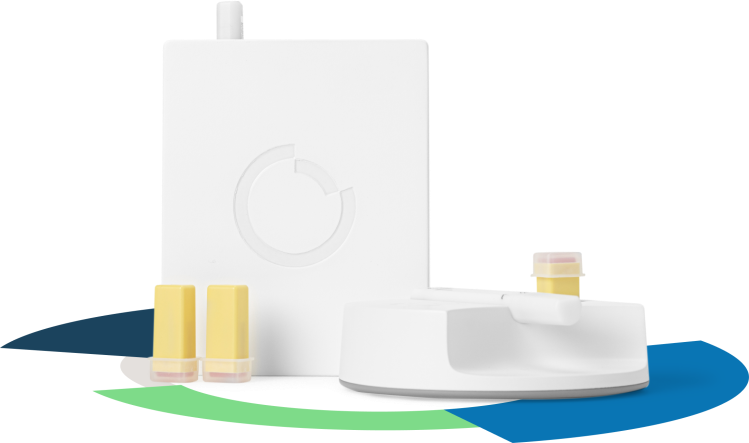
The COR One device from COR Health uses a simple finger prick to measure your erythrocyte sedimentation rate (ESR), or “sed rate.” In about 30 minutes, you get a clear signal of your body’s inflammatory state.
ESR works by observing how quickly red blood cells settle in a tube of blood. When inflammation is higher, proteins in the blood cause cells to clump and fall faster. When inflammation is lower, they settle more slowly.
Simple—but incredibly meaningful.
Because ESR isn’t just one marker. It’s a composite, whole-body signal, reflecting multiple inflammatory pathways at once.
ESR is different. It’s uniquely suited for tracking because it is
- Broad – captures multiple signals across the body
- Stable – doesn’t fluctuate wildly day to day
- Responsive – reflects sleep, stress, diet, illness, and recovery
- Trackable – can be measured frequently to reveal patterns
This makes it ideal not for diagnosing disease—but for understanding and improving your health over time.
“Optimal” Inflammation
Traditional lab results are given often to answer one question:
“Is something wrong right now?”
But may leave several left unanswered…. :
“Is this level ideal for long-term health?”
“How will my choices this week impact my next result?”
“Are my efforts and changes making any measurable impact?”
Many inflammation tests act like a snapshot—useful in the moment, but limited. Taking an ESR reading every two weeks enables your discovery into how your lifestyle impacts inflammation status, providing you with the data you need to make informed wellness choices. It all starts with the first test- so what happens when you get your first ESR reading?
Most healthy individuals tend to have ESR values in the single digits, and levels often rise gradually with age. That means being “within range” doesn’t necessarily mean you’re optimized—it just means you’re not currently flagged for disease. What matters more is your personal baseline—and how it changes. Tracking ESR provides essential insights on:
- Whether inflammation is rising or falling
- How your body responds to lifestyle changes
- Whether a spike is temporary—or something persistent
Health isn’t static. It responds to what you do every day. With consistent ESR tracking, you begin to connect the dots and ask yourself how changes in these aspects of your life….:
- Sleep and recovery
- Stress and inflammation
- Nutrition and baseline shifts
- The real impact of your wellness routine
…. impact your overall inflammation level!
Tracking inflammation is all about understanding patterns. If your levels are low and stable, you’re likely supporting a healthy lifestyle with optimal inflammation levels. If they’re temporarily elevated, it may reflect recent stress, illness, or lifestyle factors. If they’re persistently rising, it’s a signal worth paying attention to and exploring further.
Tracking helps you understand your inflammation patterns.
And when you can understand them, you can change your long-term health trajectory.
The COR system makes that possible—by turning a once-invisible process into something measurable, personal, and actionable.
Get started with our COR Starter Pack to establish your baseline ESR levels! This bundle includes 3 tests, using minimal blood samples via finger prick. To get a clear picture of your current average inflammation level, we recommend taking 3 tests over 2 weeks. After you establish a baseline, perform a single COR test every two weeks to monitor trends.
As a special thanks for reading this article…. use promo code “COR5” to get $5 off your COR Starter Pack!